

Tankless Water Heater Descaling in Van Nuys: Annual Maintenance Guide
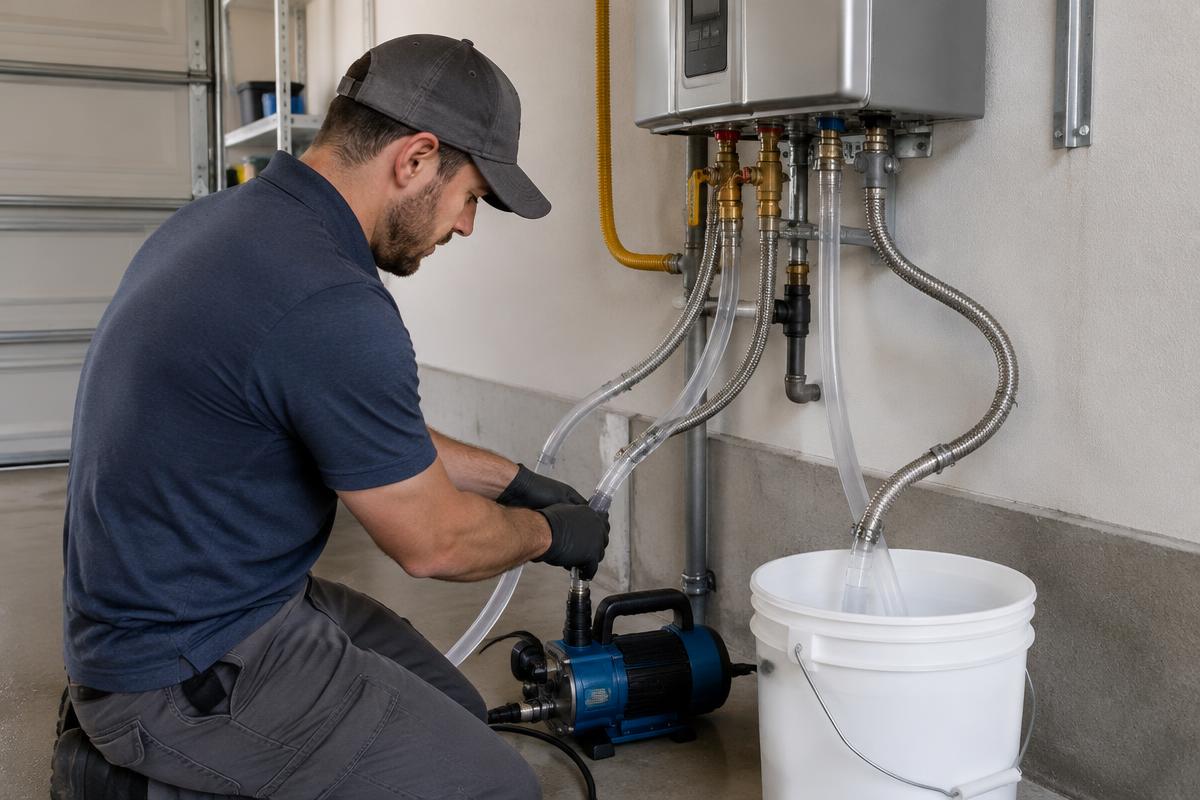
Tankless water heaters are often described as maintenance-free. In the San Fernando Valley, they are anything but. The same hard water that builds sediment in a tank coats the inside of a tankless heat exchanger with mineral scale, and because a tankless unit heats water in seconds through narrow channels, it is even more sensitive to scale than a tank system. An annual descaling flush is often the difference between a unit that keeps running for many years and one that starts throwing error codes early.
What Scale Does Inside a Tankless Unit
Much of the Valley's water carries high levels of calcium and magnesium. When water flashes through the heat exchanger at high temperature, those minerals drop out of solution and bond to the metal tubing. The result:
- Narrowed waterways that restrict flow and strain the flow sensor
- Insulated heat transfer surfaces that force the burner to run hotter and longer
- Erratic output temperatures, with bursts of hot water followed by cold slugs
- Error codes tied to overheating, flame failure, or flow restrictions
Scale is a leading cause of tankless heat exchanger problems, and a failed heat exchanger is among the most serious repairs a tankless unit can face.
Warning Signs Your Unit Needs Descaling
- Water temperature swings during a single shower
- The unit displays fault codes that mention overheating or low flow
- Hot water flow is noticeably weaker than cold
- The unit takes longer to deliver hot water than it used to
- It has been more than twelve months since the last flush
Any one of these deserves a professional water heater service visit before the exchanger is permanently damaged.
What a Professional Descaling Flush Involves
The plumber closes the service valves on the unit's cold and hot lines, connects a small recirculating pump with hoses and a bucket, and runs a descaling solution, typically food-grade vinegar or a commercial descaler, through the heat exchanger for about an hour. The solution dissolves the mineral buildup, and you can often see it in the bucket as the flush goes on. A complete visit also includes:
- Cleaning or replacing the inlet water filter screen
- Inspecting the condensate trap and venting
- Checking gas pressure and combustion
- Testing safety shutoffs and confirming the error log is clear
Why Skipping a Year Adds Up
Scale builds faster with harder water and heavier use, so a skipped year can leave a much thicker layer inside the exchanger. The relationship is not linear: as scale thickens, the unit runs hotter, which tends to deposit even more scale. Units flushed every year routinely stay in better shape than units serviced only every few years.
Frequently Asked Questions
How often should a tankless water heater be descaled?
Once a year is a sound default for most Valley homes. Larger households or homes with very hard water may benefit from flushing every six to nine months.
Can I descale a tankless unit myself?
Some homeowners with service valves and a pump kit do it themselves, but connecting the hoses backward, using the wrong concentration, or skipping the filter cleaning can leave problems behind. A professional visit also covers combustion and safety checks that a flush alone does not.
Do water softeners eliminate the need for descaling?
Softened water dramatically reduces scale, but it does not remove the need for maintenance. Softened water can also be harder on some components, so annual service remains a good idea.