

Water Heater Seismic Strapping in Van Nuys: What the Code Requires
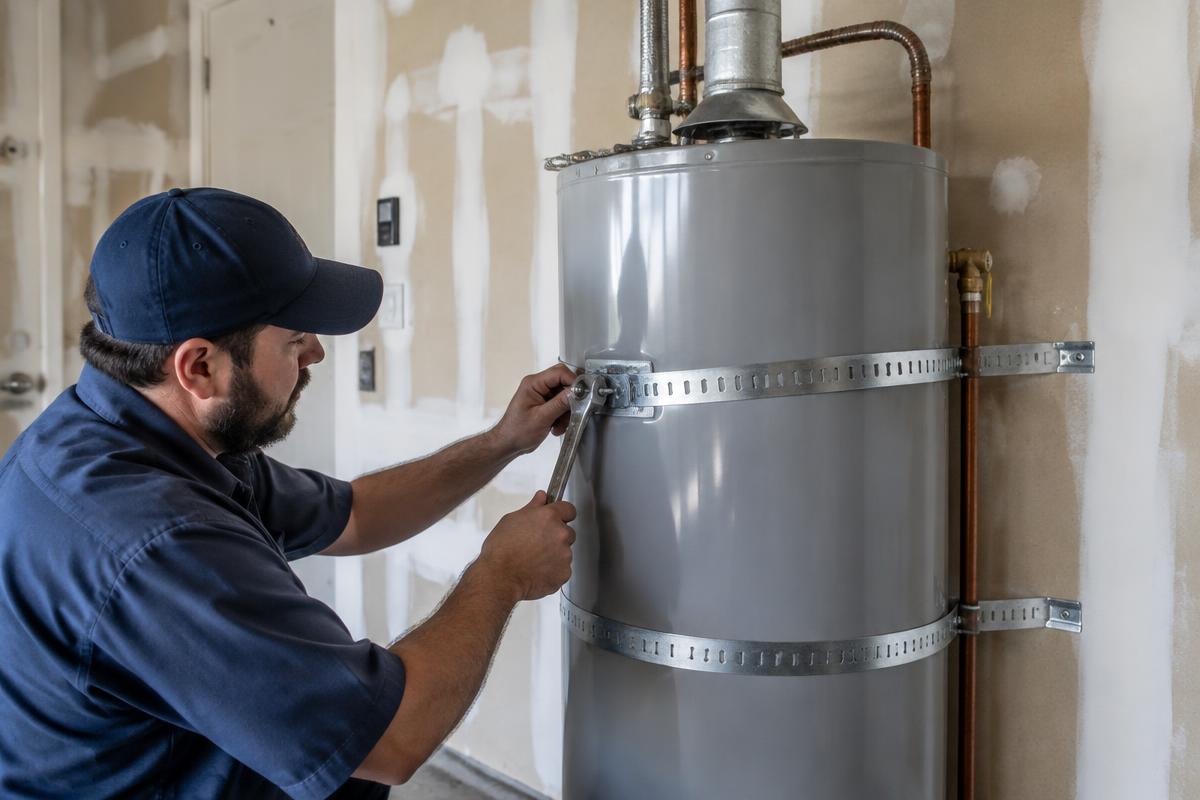
California is one of the few states that legally requires water heaters to be braced against earthquakes, and for good reason. An unstrapped tank is a top-heavy cylinder of hot water standing on a narrow base. In a significant quake it can topple, snap the gas line behind it, and create both a fire hazard and a flood. The San Fernando Valley sits in earthquake country, and after a major quake roads and utilities can be disrupted, so bracing the tank is one of the simplest pieces of earthquake preparedness a homeowner can do.
What the Code Actually Says
State law, carried out through the plumbing code, directs that every new and replacement water heater be braced, anchored, or strapped so it resists falling or shifting sideways in an earthquake. In practice, that means:
- Two straps at minimum, one in the upper third of the tank and one in the lower third
- Straps anchored to wall studs or masonry, never just drywall, using heavy lag screws and washers
- Purpose-made strapping kits, since ordinary plumber's tape is too thin to meet the requirement
- Flexible gas connectors, so a small shift does not snap a rigid gas line
Home sale paperwork in California asks whether the water heater is braced, which means missing or improper strapping tends to surface at some point anyway.
Why Older Installations Fall Short
Many older Valley homes have tanks strapped with whatever was available decades ago: thin steel tape, straps screwed into drywall anchors, or a single strap around the middle. All of it falls short of what is expected today. Other problems commonly found during a water heater service visit include straps so loose a hand can move the tank, missing lower straps hidden behind the drain pan, and rigid gas connections that leave no room for movement.
The Risk of Ignoring It
A 40-gallon tank holds about 330 pounds of water. Tipped over, it tears supply and gas lines, releases hot water across the garage floor, and can crush whatever falls with it. The Northridge earthquake of 1994, centered in the San Fernando Valley, showed how damaging toppled water heaters and broken gas lines can be. Bracing a tank is a small job compared with the damage it can prevent.
What a Bracing Visit Covers
- Inspect the tank, straps, and anchors against the current requirements
- Install two approved straps anchored to studs or masonry
- Replace rigid gas connections with a flexible connector where needed
- Check the T&P relief valve discharge piping and the drain pan
- Confirm clearances and make sure the tank is level
It is a short job, and it doubles as a general health check on the unit, including the anode, fittings, and venting.
Frequently Asked Questions
Is seismic strapping required for existing water heaters?
The requirement applies at installation and replacement, and sellers are asked about bracing when a home is sold. Beyond the paperwork, a braced tank is simply safer in every California home.
Can I strap the water heater myself?
A confident DIYer can, but the details matter. Stud anchoring, strap height, and flexible gas connections are where do-it-yourself jobs most often fall short. A plumber who knows the code can make sure the work is done right.
Do tankless water heaters need strapping?
Wall-mounted tankless units must be securely anchored to the wall structure, and their gas and water connections should be flexible for the same reason.