

Water Heater Leaks in Van Nuys: What the Leak Location Tells You
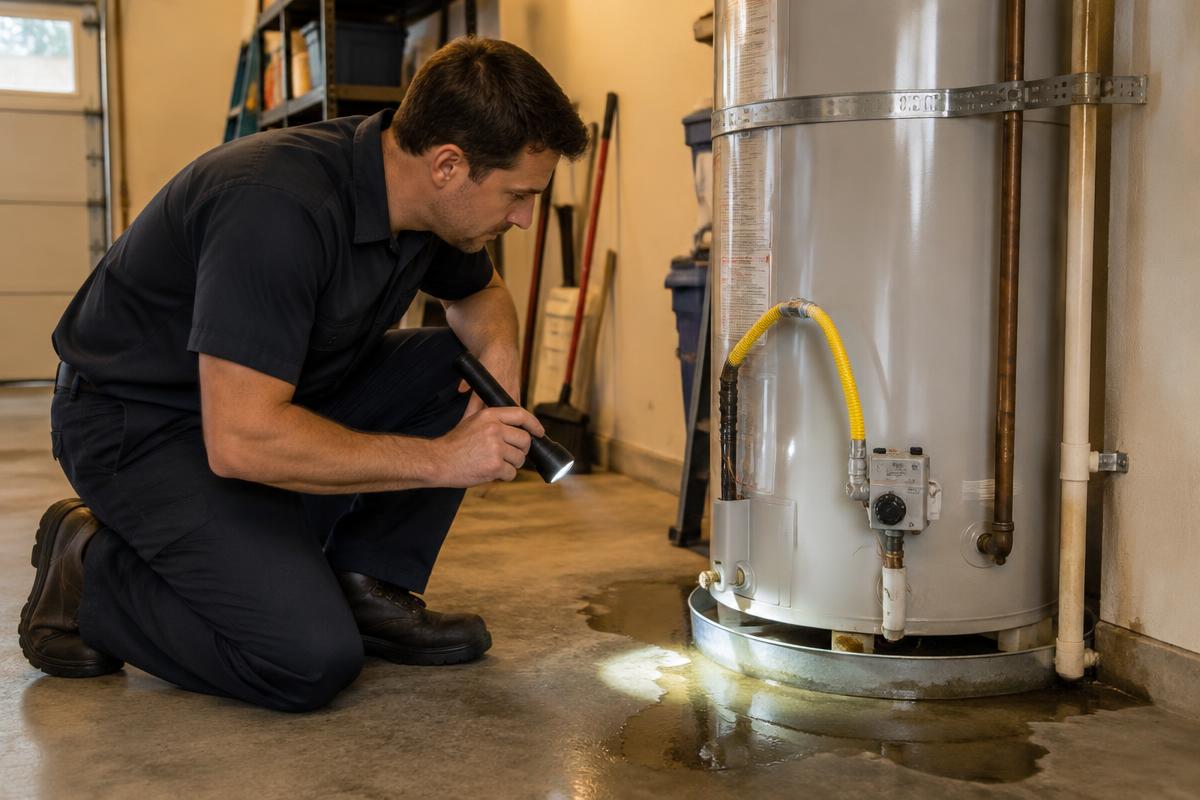
Finding water around your water heater is alarming, but the puddle alone does not tell the whole story. Where the water appears, at the top, middle, or bottom of the tank, points to very different problems, and some of them are entirely repairable if you act quickly. Before you assume the worst, a professional water heater service visit can pinpoint the source and say honestly whether a repair makes sense.
Leaks at the Top of the Tank
Water at the fittings on top of the unit usually means one of these:
- Loose inlet or outlet connections, since copper fittings expand and contract with temperature and can work loose over time
- Corroded cold or hot water nipples, a common spot for galvanic corrosion where dissimilar metals meet, particularly in older installations
- A failing temperature and pressure (T&P) relief valve or its discharge pipe, which may drip when pressure or temperature runs too high
These are among the most repairable leaks. If corrosion has not reached the tank threads themselves, a plumber can replace the fittings, connectors, or relief valve and stop the leak for good.
Leaks in the Middle of the Tank
Water running down the side of the tank usually started higher up. Look above the streak: a corroded fitting, the relief valve, or a sweating inlet line can let water run down and pool at the base, making a small fitting leak look like a tank failure. A careful plumber dries the area and traces the water to its true origin before condemning the tank.
Leaks at the Bottom of the Tank
The base is where the news gets worse:
- Drain valve leaks are repairable, since a worn plastic valve can be replaced with a brass one
- Internal tank leaks show up as weeping from the seam or the burner access cover and cannot be safely patched
A tank that leaks from the body itself has corroded through the steel and glass lining. Hard water and sediment buildup over the years can contribute, and an internal leak means replacement. Continuing to run the tank risks a sudden failure that floods the space.
Is It a Leak or Just Condensation?
A cold tank, or cold inlet piping on a warm day, can sweat and leave a thin film of water on the floor. Wipe everything dry, place paper towels around the unit, and check again in a few hours. Condensation wets the towels evenly. A real leak wets them from one specific point and returns quickly.
What to Do the Moment You Find Water
- Turn off power at the breaker, or turn the gas control to OFF
- Close the cold water inlet valve on top of the unit
- Clear belongings away from the area
- Call a plumber promptly
Shutting the unit down early keeps a slow weep from becoming a burst, and it protects the heating elements or burner from running dry. If you are unsure where the shutoff valves are, a plumber can show you and label them during any water heater service visit.
Frequently Asked Questions
Can a leaking water heater be repaired?
Fittings, valves, and connections can almost always be repaired. A tank body that is leaking cannot be safely patched and needs replacement.
How urgent is a small drip at the bottom?
Urgent enough to call right away. A drip that starts from corrosion rarely stops on its own and tends to get worse.
Why does my water heater leak more in the morning?
Condensation from overnight temperature swings is a common cause. Dry the area and monitor it. A true leak keeps coming back from one spot.