

Storm Season Prep: Clean Your Outdoor and Area Drains Before Rain
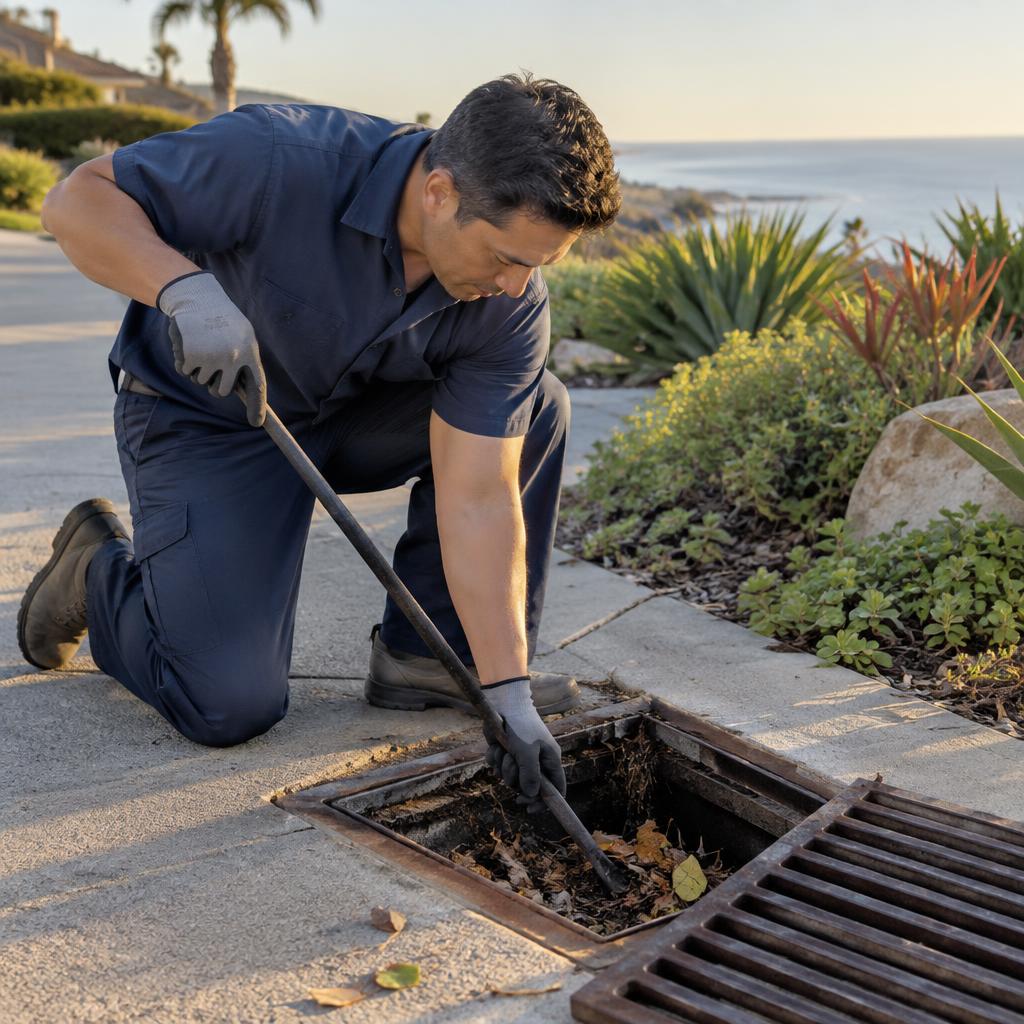
Rain in the San Fernando Valley tends to arrive in bursts. A single strong storm can drop a surprising amount of water in a few hours onto driveways, patios, and yards that have been bone dry for months. The gap between a wet afternoon and a flooded garage often comes down to one thing: whether your outdoor drains were professionally cleaned before the water showed up.
Which Drains Protect Your Property
Most properties have more outdoor drainage than owners realize, and each piece matters in a storm:
- Area drains, square or round grates set into planters, lawns, and paving that collect water flowing across the property
- Yard drains and catch basins, larger basins with a sump that traps sediment below the outlet pipe
- Driveway channel drains, long linear grates that keep runoff away from the garage and front door
- Roof and deck drains, the outlets that keep flat roofs and balconies from ponding
- Sump discharge lines, the path pumped water follows away from the foundation
When any of these backs up, the water does not vanish. It looks for the lowest opening, and that is frequently a doorway, a slider, or the garage.
What Fills Them Between Seasons
A long dry stretch is enough to clog an outdoor drain completely. Wind pushes leaves, dust, and trash into open grates. Gardeners leave clippings and mulch behind. Mature trees along Valley streets drop leaves and seed pods year round, and roots, always hunting for moisture, find the damp inside of drain lines and can grow dense enough to block them.
A grate can look perfectly clear while the pipe underneath holds several inches of sediment and a root mass waiting for the first big storm.
The Pre-Season Checklist
Walk the property before the rains and check each drain:
- Lift every grate and look for standing water, sediment, and debris
- Run a hose into each drain for several minutes and confirm the water disappears quickly
- Clear debris from driveway channels and roof scuppers
- Make sure downspout extensions and discharge lines still carry water away from the foundation
- Listen for slow drainage or gurgling, which suggests the blockage is in the pipe and not in the grate
Anything slower than gone in seconds deserves a plumber's attention before the first storm, not during it.
How Outdoor Drains Are Cleaned Properly
Surface debris is only the top layer. A thorough pre-season job includes pulling and washing the grates, removing the sediment collected in the basin, cabling or jetting the pipe run toward the street or sump, and hydro jetting lines with root intrusion or heavy scale. A camera pass on a problem line confirms the whole run is open, because the middle of a storm is the worst moment to learn it is not.
Hillside and Sloped Properties: Extra Urgency
Homes on the hillsides of places like Sherman Oaks, Studio City, Encino, and Woodland Hills see runoff arrive with real speed and volume. On a slope, a blocked area drain is more than an annoyance: water keeps moving toward the structure with momentum. Clearing those drains in advance is one of the simplest ways to protect a house from storm damage.
Frequently Asked Questions
When should outdoor drains be cleaned?
In early fall, before the first significant rain. One visit usually covers the whole season.
Can I just hose the drains out myself?
Hosing clears surface debris and is worth doing. It will not remove root intrusion, hardened sediment, or scale deep in the pipe, which are the blockages that fail during a storm.
My drain backed up last winter but seems fine now. Should I still have it cleaned?
Yes. Whatever blocked it is probably still in the line, compacted and ready to catch this year's debris. A camera inspection shows exactly what is down there.
Do outdoor drains connect to the sewer?
Usually not. Most route to a storm drain system or a dry well. That is exactly why they must stay clear: no backup means no overflow onto your property.