

Hydro Jetting vs. Drain Snaking: Which Does Your Van Nuys Home Need?
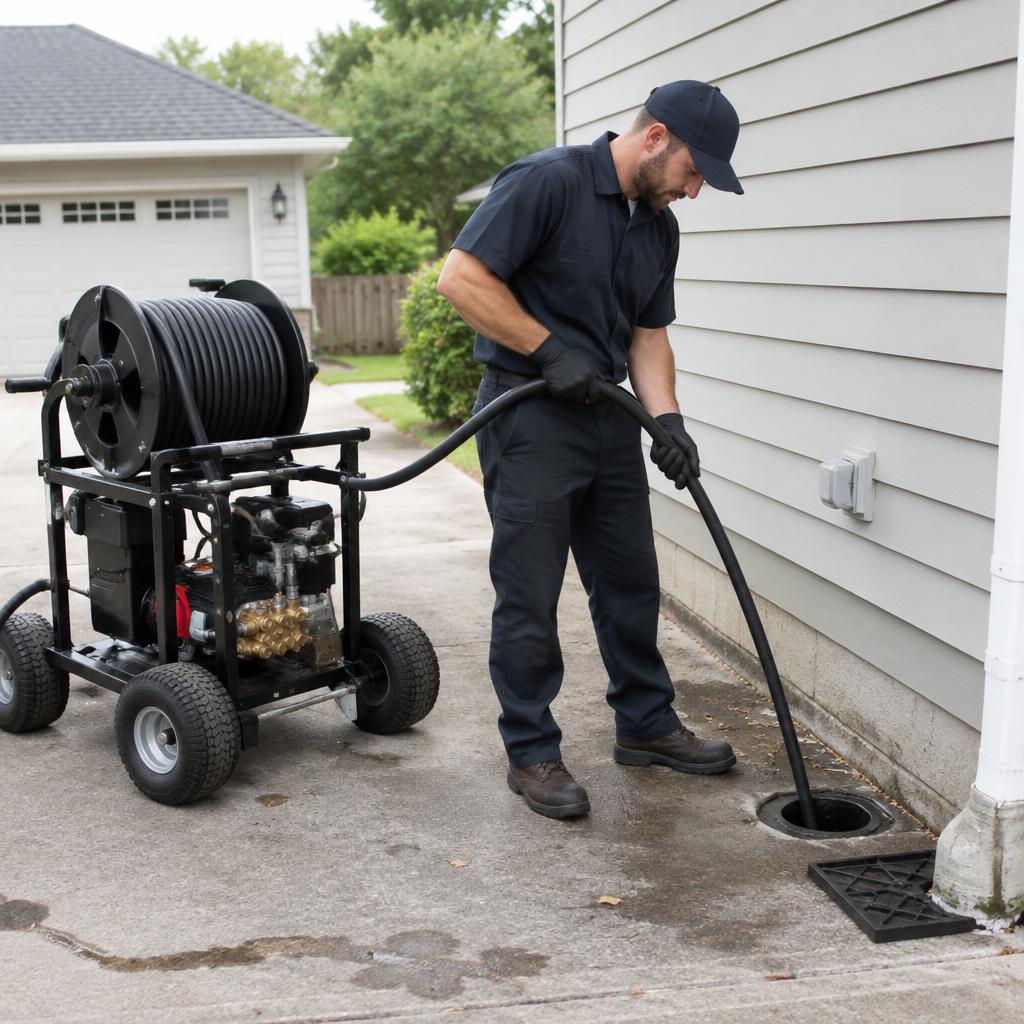
Both methods clear clogged drains. They do very different jobs, though, and picking the wrong one is the most common reason a drain clogs again within a month. Understanding the difference helps you ask better questions before any drain cleaning appointment.
What Drain Snaking Does
A snake, also called a drain auger, is a steel cable with a corkscrew or blade on the end. The cable rotates through the pipe until the tip bites into the blockage. Pulling it back, or pushing the clog through, reopens the line.
Snaking is quick, precise, and gentle on older pipe. For a single solid obstruction, such as a toy, a hygiene product, or a dense hair ball, it is the right tool. The tradeoff is that a snake opens a hole through the middle of soft buildup. Grease, sludge, and scale on the pipe walls stay in place, and new waste catches on them right away.
What Hydro Jetting Does
A jetting machine sends water through a specialized nozzle at pressure high enough to scour the whole pipe interior. Nozzles are chosen for the job: some cut through roots, some pull the hose forward through grease, and some spin to clean the wall all the way around.
Jetting removes the film and not just the blockage. A line that has been jetted properly is restored close to its original diameter, which is why jetted drains tend to stay clear far longer than snaked ones.
A Simple Comparison
| Situation | Best Method |
|---|---|
| One solid object blocking a fixture drain | Snaking |
| Hair clog in a shower or bathroom sink | Snaking, then flush |
| Grease-heavy kitchen line | Hydro jetting |
| Recurring clogs in the same drain | Hydro jetting after a camera inspection |
| Roots in the main sewer line | Jetting with a root-cutting nozzle |
| Fragile, corroded, or damaged pipe | Gentle snaking only; jetting requires a sound pipe |
Why a Camera Inspection Comes First
Jetting is powerful, and power needs information. A camera run beforehand confirms the pipe is sound enough to take the pressure and shows exactly what is blocking it. Many Van Nuys and Valley homes date from the mid-century building boom and still have original clay or cast iron drain lines, so a look inside before any high-pressure work is just good sense.
Inspecting first also keeps you from paying to clear a line that really needs pipe repair. A collapsed or offset section will clog again no matter how well it is cleaned.
The Answer for Most Homes: The Right Tool, Not the Loudest One
A well-equipped plumber uses both machines and puts each where it does the most good. A kitchen line glazed with years of grease gets jetted. A bathroom sink with a hair mass gets snaked and flushed. Matching the method to the clog, instead of defaulting to one tool, is what turns a two-month fix into a long-term one.
Frequently Asked Questions
Is hydro jetting safe for my pipes?
For structurally sound pipe, yes, which is why a camera inspection comes before it. Fragile or corroded lines are better cleared mechanically.
Why did my drain clog again after being snaked?
Snaking opens a channel through soft buildup but leaves the walls coated. The following weeks of use re-clog the narrowed pipe. Jetting removes the coating itself.
How long does hydro jetting take?
That depends on the line and how heavy the buildup is. A typical residential job includes setup, the cleaning itself, and a final camera pass to confirm the pipe is clear.
How often should a main line be jetted?
Homes with mature trees, heavy kitchen use, or a history of backups often do well with periodic jetting. A camera inspection helps set a sensible interval for your line.