

Bathroom Sink Drain Cleaning in Van Nuys: Stop the Slow Drain Cycle
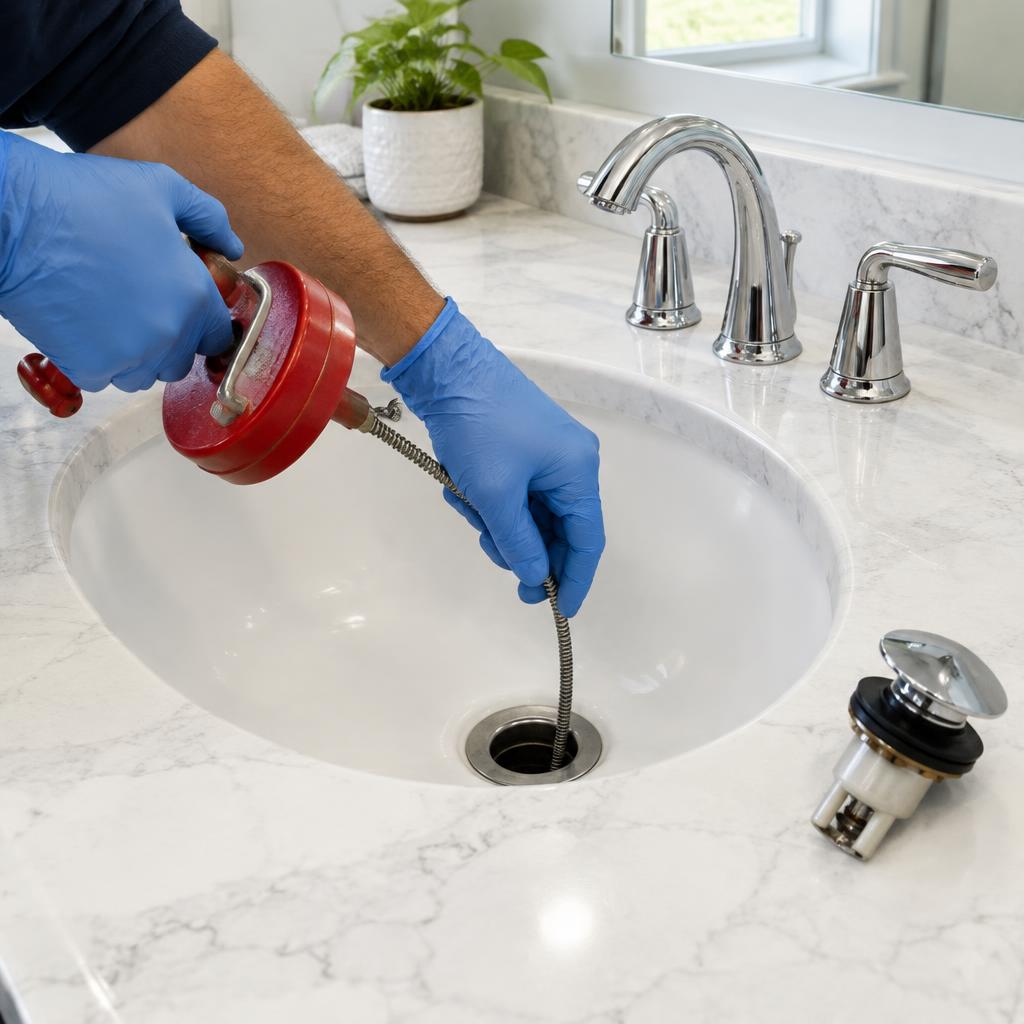
A bathroom sink rarely clogs all at once. It slows down over weeks until brushing your teeth means watching water pool around the drain. That gradual slowdown almost always traces back to one spot: the drain cleaning problem that begins at the pop-up stopper.
Why Bathroom Sinks Clog So Gradually
Almost everything that goes down a bathroom sink is sticky by design. Toothpaste, shaving cream, hand soap, and skin oils coat the inside of the pipe in thin layers. Hair and dental floss snag on that rough coating, and each layer narrows the passage a little more.
Hard water speeds the process up, and much of the San Fernando Valley has it. Minerals combine with soap to form a chalky scale that hardens in the trap and the first few feet of pipe, and the sticky mix keeps collecting hair instead of rinsing away.
The Pop-Up Stopper: The First Suspect
The mechanism that lets you plug the sink is also the best debris collector in the bathroom. Hair wraps around the pivot rod and the base of the stopper, forming a dense mat that restricts flow long before the pipe itself is clogged.
Pulling the stopper and cleaning it restores a surprising amount of drainage. If the slowdown continues with the stopper out, the buildup has moved past the visible parts and into the pipe.
Why Store-Bought Cleaners Can Make It Worse
Chemical drain openers produce heat as they dissolve material. In a pipe already coated with soap film and scale, that heat can soften plastic joints and often fails to reach the full clog. The result is a partly opened drain that re-clogs in a few weeks, sometimes with the residue hardened further down the line.
Mechanical cleaning removes the material instead of moving it around. A small hand auger or a flexible snake pulls out hair and scrapes film off the pipe wall, restoring the diameter the drain was built with.
What a Thorough Cleaning Covers
A complete bathroom sink cleaning follows the whole path:
- Removing and cleaning the stopper assembly and pivot rod
- Clearing the trap and the wall arm behind it
- Augering the branch line toward the main drain
- Running water to confirm drainage is quick, quiet, and complete
- Practical advice on what to keep out of the drain going forward
When a Slow Sink Means Something Bigger
If the bathroom sink gurgles when the toilet flushes, or water rises in the tub when the sink drains, the blockage sits in a shared branch or the main line. Those symptoms call for a full drain inspection, not another round at the stopper.
Frequently Asked Questions
How often should a bathroom sink be professionally cleaned?
Most homes only need it when drainage noticeably slows. Busy bathrooms with hard water often benefit from a cleaning every year or two.
Can I clean the stopper myself?
Yes. Twist or release the stopper, lift it out, and clear the hair from the shaft. If flow does not fully recover, the clog is deeper in the pipe.
Are enzymatic drain treatments worth using?
Monthly enzymatic treatments can slow soap and organic buildup between cleanings. They will not dissolve an established clog.
Why does my sink smell even though it drains well?
Odor with normal drainage usually points to biofilm in the overflow passage or a trap that has dried out. Cleaning the sink and running water through every fixture in the house typically resolves it.